GUS Band
A championship brass band with a history going back to the 1930s, a full concert diary and a committee of volunteers. They were selling tickets on a spreadsheet and a WhatsApp group.
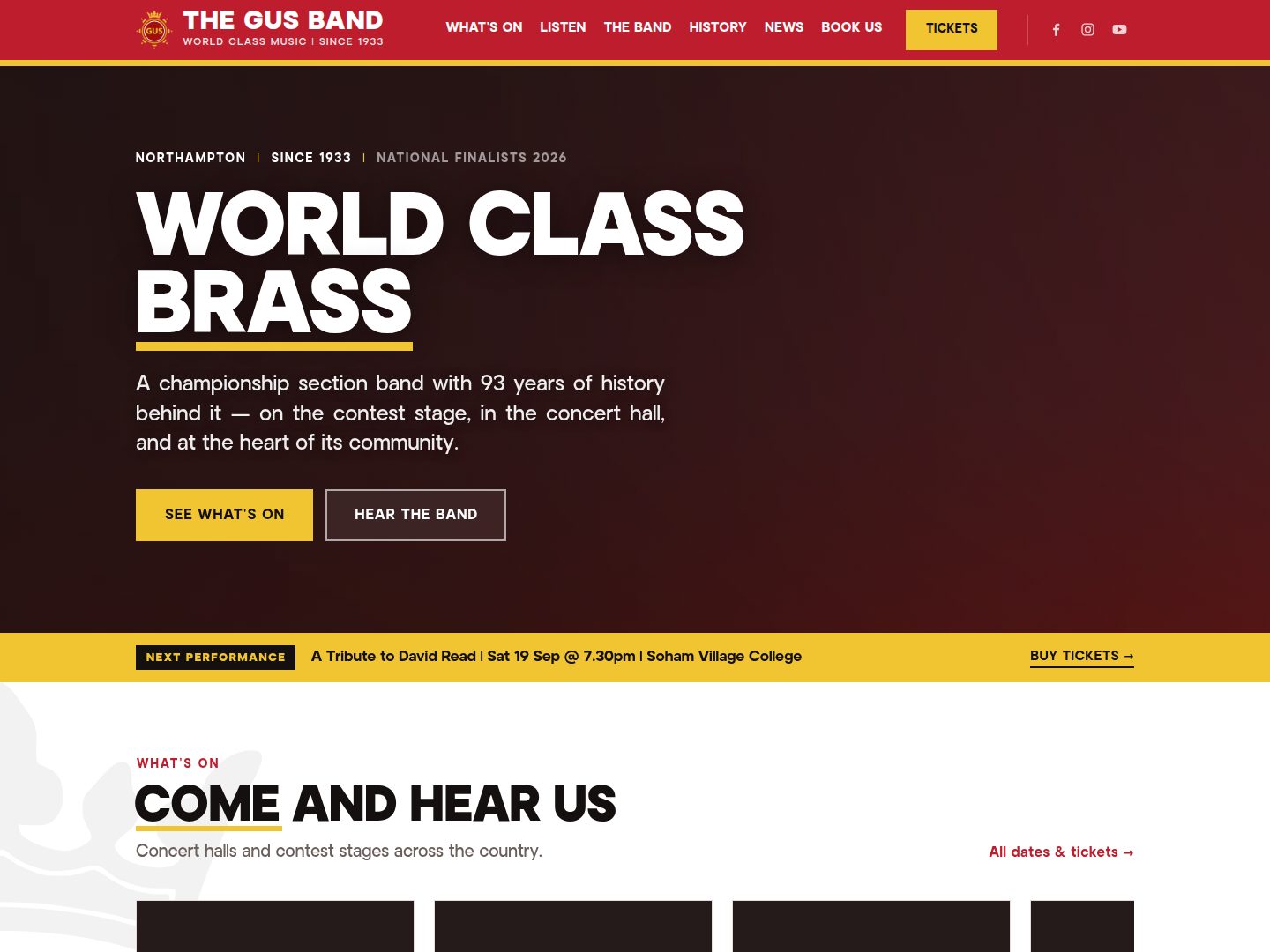 The new site
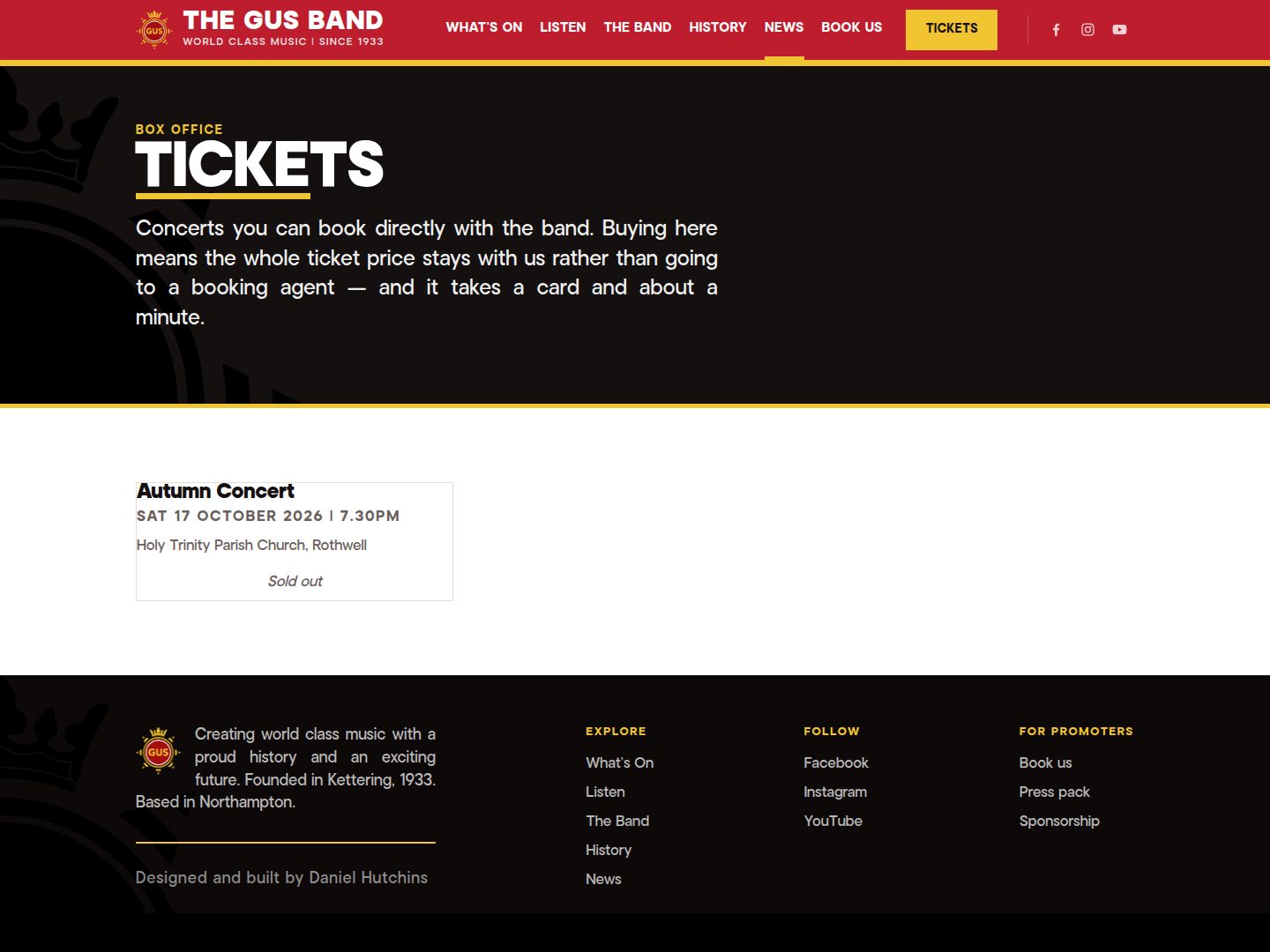 The box office
Concert tickets were sold by whoever was nearest a phone, reconciled by the treasurer at the end, and counted on the night. Members got rehearsal notes and music by email chains that nobody could find a week later. The old site said who the band was but did none of the band's work, and every update went through one person.
What success looked like- Tickets sold online, paid by card, delivered by email, with the committee able to see what has sold at any moment.
- One place for members — rehearsal notes, music, the fixture list — that people actually use.
- A site the committee can update without a developer in the loop.
- Something other bands notice.
Why build a box office rather than use a ticketing service. The services take a cut of every ticket and put the band's audience on someone else's list. A band sells a few thousand tickets a year to people it already knows. Owning the box office means keeping the margin and the relationship, and the cost of building it is paid once.
Why a members' area at all. The band's most important audience is its own players. A members' hub is not a nice-to-have on a band site; it is the part that gets opened every week, which is what keeps the rest of the site alive.
Why an admin screen with limits. A committee changes over. The admin screen is built so that the person doing the updates in three years' time, who has never met us, can do what needs doing and cannot break what doesn't. Preview, publish, put it back.
The solution- A hand-coded public site — the band, the diary, the news — built to be the best-looking band site on the circuit.
- A box office with card payments, e-tickets by email, and a live view of sales for the committee.
- A members' hub behind a sign-in: notes, music, fixtures.
- An admin screen the committee runs: content, events, tickets, people.
- Hosting that costs the band almost nothing.
Measured after launch — tickets sold online as a share of the total, the treasurer's hours saved per concert, and how many members sign in each week. This page is updated when the numbers exist.
Daniel plays cornet with the band, which is how the job started, and why the members' hub was designed by someone who has to use it on a Thursday night.